


The abuse omega 6 and the deficit in omega 3 support obesity from generation to generation
A chronic excess of linoleic acid or omega 6 coupled to a deficit in alpha-linoleic acid or omega 3 in the food
support a transgénérationnelle increase in obesity. With this intention the researchers exposed several generations
of male mouses and female and their souriceaux to an “occidentalized” food mode of this type and evaluated the consequences of such a lipidic environment in the human consumption. These results are published on the site of the Newspaper off Lipid Research.
Omegas 6 and 3 are essential polyinsaturés fatty-acids: they are essential to the human organism which cannot produce them itself and must thus find them in its food. Omegas 6 are contained in particular in the corn which itself is introduced in great quantities by the livestock whose man nourishes himself in his turn (half of the lipids which we consume come from the meat and the dairy products). Omegas 3 as for them are present primarily in grass, linseeds, colza and fish fatty like salmon, sardine or mackerel very rich in omega 3. During these forty last years, obesity regularly increased with the generations in the Western companies. During this same period, the food of the industrialized countries is marked by a quantitative increase in the introduced calories (lipids accounting for 35 to 40% of the nutritional contributions) and by contents raised in linoleic acid (omega 6) and weak in alpha-linoleic acid (omega 3). Indeed, the quantity of omega 6 introduced during these four last decades increased considerably (+ 250%) while that of omega 3 dropped by 40%, thus unbalancing the report/ratio omega 6/oméga 3 compared to the contributions recommended. Indeed, the AFSSA recommends a ratio of 5 omegas 6 per 1 omega 3, but we consume 15 omega 6 per 1 omega 3. In the United States the report/ratio can even reach 40 omegas 6 per 1 omega 3.
To carry out their experiment, the researchers exposed four generations of mouse to a food mode of Western type, characterized by these same reports/ratios omega 6/oméga 3. Result: they observed a progressive increase in their fat mass on several generations. They also noted the appearance of metabolic disorders like insulino-resistance, first stage towards the development of the diabetes of the type 2 and the stimulation of the gene expression of inflammatory nature implied in obesity.
Thus, on a genetically stable animal population, the exposure to a food pointing out that of the countries developed or in the process of development is enough to make emerge a transgénérationnelle obesity, in agreement with the data collected at the man. One knows the beneficial role of the essential polyinsaturés fatty-acids omega 6 (linoleic acid) in the treatment of the hypercholesterolemy and that of omegas 3 in cerebral operation. But soups in an unbalanced way, they increase the factors supporting obesity and can have serious consequences, in the long run on the human health. The implications of such observations should be more systematically taken into account by agribusiness industry.
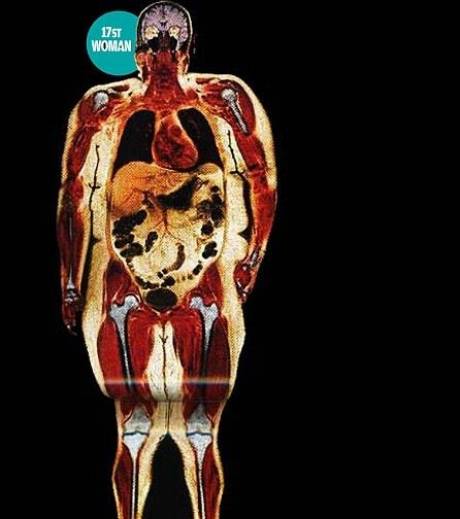
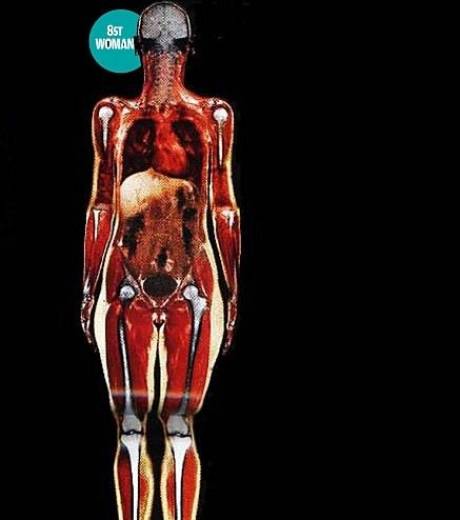
The first two images of this gallery show the dramatic consequences of the obesity: fats get everywhere, including in the internal organs, where their presence can pull grave problems of health.
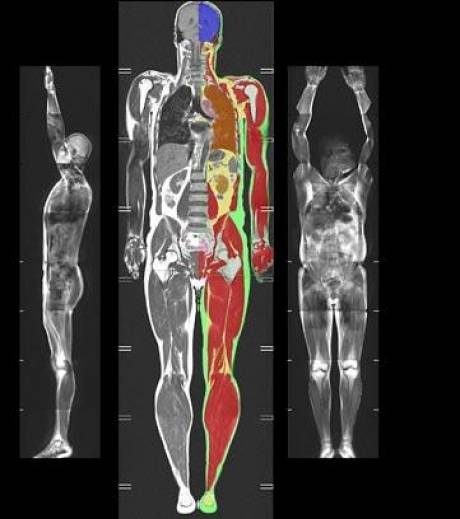
MRI of an athletic man..




I was reading something else about this on another blog. Interesting. Your position on it is diametrically opposed to what I read in the first place. I am still mulling over the diverse points of view, but I’m inclined heavily toward yours. And irrespective, that’s what is so super about modern democracy and the marketplace of thoughts online.
Hi! I just came to thank you for your really attention grabbing posting. Postings similar to this are a really perfect way to assist me in English, but I think I got the message ok Thanks again!
Good blog! I really love how it is effortless on my eyes and the facts is well written. I am wondering how I could be notified whenever a new post has been made. I have subscribed to your rss feed which must do the trick! Have a nice day!
This is definitely a blog worth following. Youve got a great deal to say about this subject, and so much knowledge. I think that you know how to make people listen to what you have to say, especially with an issue thats so important. Im glad to know this blog. Two big thumbs up, man!
I can enjoy that you took considerable effort on this. Nice work!
“If your name is on Chexsystems you need to pay off the debt for the old account. Then you should beable to open another checking. If not then you may only beable to get a savings.”
and i have to tell that you just prepare exceptionally great by using your site.
Thanks for contributing so much with this great content.
Where can i find your rss? I cant find it
Hello!, You can see and sign the RSS at the upper right of the home page
I thought it was going to be some boring old post, but I’m glad I visited. I will post a link to this site on my blog. I am sure my visitors will find that very useful.
I thought it was going to be some boring old post, but I’m glad I visited. I will post a link to this page on my blog. I am sure my visitors will find that very useful.
I had fun reading this post. I want to see more on this issue.. Thanks for writing this respectable piece of writing. In any case, I’m going to sign to your rss and I wish you write great articles again soon.
Thank You for the information , we are going to see what append ? , have a good weekend ! williams